B2B Lead Generation Strategies That Work (And Why Most Businesses Struggle)
B2B lead generation strategies that work combine inbound content, paid acquisition, and outbound outreach into a coordinated multi-channel funnel - not a single tactic deployed in isolation. According to Salesforce's lead generation research, multi-touch, multi-channel approaches consistently outperform single-channel efforts, yet most SMBs keep funnelling budget into one tactic and wondering why results plateau.
The reality is that most small and mid-sized businesses don't struggle with lead generation because they lack ideas. They struggle because they target too broadly, ignore funnel-stage alignment, and lean on whichever single channel feels most comfortable. Zendesk's B2B lead generation research reinforces this: the companies generating consistent pipeline are those treating lead generation as a system, not a series of disconnected campaigns.
In the Kitchener-Waterloo region and across the broader Canadian SMB market, businesses that pair digital inbound funnels with direct outbound sequences report shorter sales cycles and higher volumes of qualified leads.
These aren't theoretical observations, they're patterns we've seen repeatedly at our agency, Tactycs. We work with SMBs across Kitchener-Waterloo and Ontario to turn scattered marketing efforts into predictable lead pipelines.
Knowing how to analyze your target market demographics before building any of these strategies is what separates businesses that generate real pipeline from those that generate noise. This guide covers paid ads, organic content funnels, lead magnets, email nurturing, LinkedIn ABM, and outbound automation.

7 B2B Lead Generation Strategies That Deliver Measurable Pipeline in 2026
1. Paid Ads for Top-of-Funnel Volume
Google Search and LinkedIn Ads remain the highest-intent paid channels for B2B lead generation, and they serve different but complementary purposes. Google captures active buying intent - someone searching "B2B marketing agency Kitchener" is already in buying mode. LinkedIn's strength is precision targeting: you can serve ads specifically to CFOs at manufacturing companies with 50–200 employees in Ontario, which is a level of firmographic specificity that no other platform matches.
For Canadian SMBs, LinkedIn Lead Gen Forms are worth prioritizing. Because they pre-populate contact fields from a user's profile, they reduce friction significantly and can lower cost-per-lead by up to 30% compared to routing traffic to a landing page. That said, you need a minimum of $1,500–$3,000 CAD/month to gather statistically meaningful data before making optimization decisions. Starting with a narrow Ideal Customer Profile (ICP) is non-negotiable - broad targeting at low budgets produces diluted data and poor CPL.
AdRoll's B2B lead generation guide also highlights retargeting as a critical paid layer: if someone visits your pricing page but doesn't convert, retargeted display ads keep you front-of-mind during their decision window.
2. Organic Content Funnels With Funnel-Stage Alignment
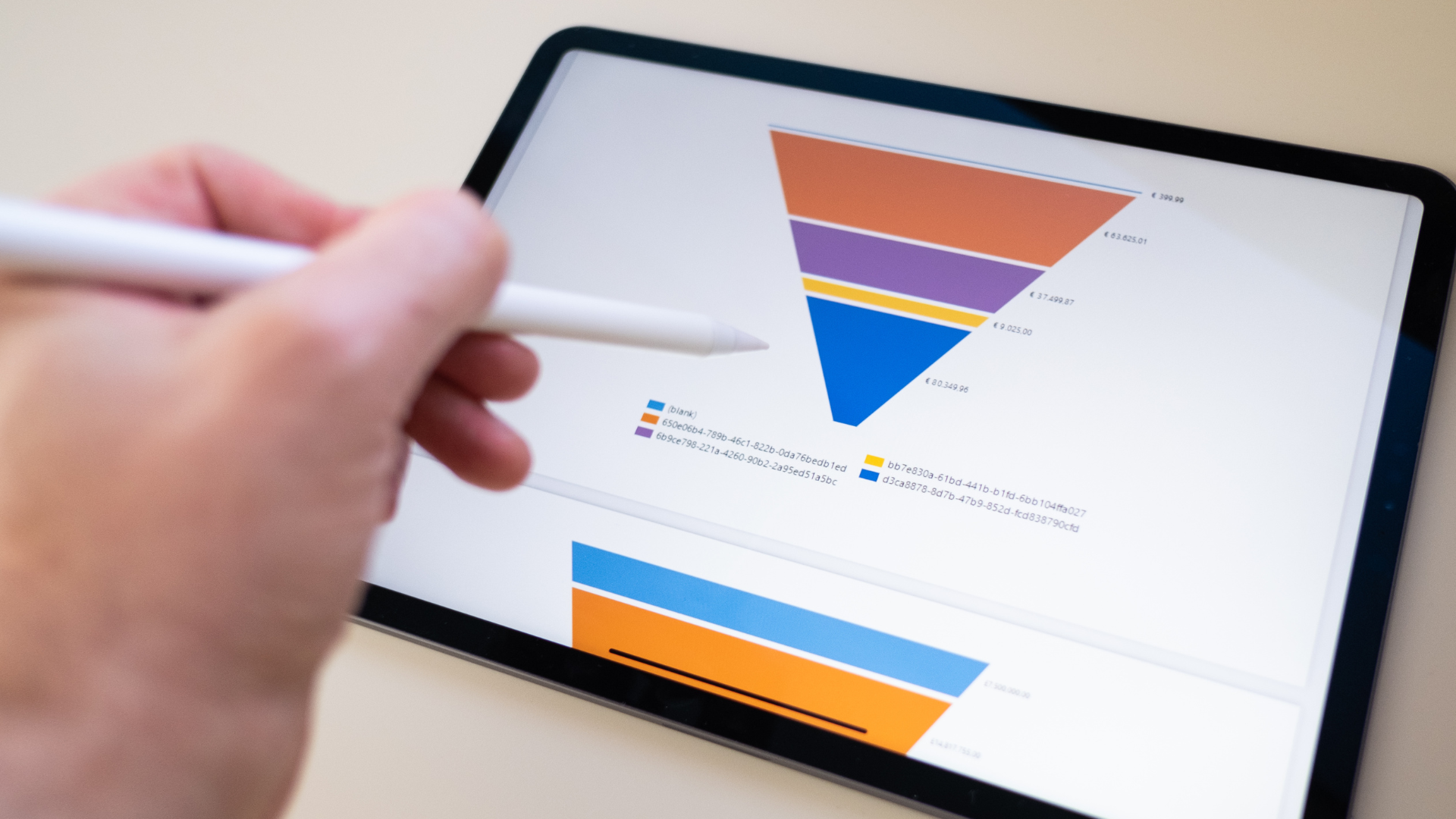
Most B2B content fails for a straightforward reason: it targets awareness-stage readers when the business actually needs decision-stage buyers, or it creates bottom-of-funnel content before establishing any top-of-funnel authority. The fix is explicit funnel-stage mapping. Your inbound marketing strategy should produce:
TOFU (Top of Funnel): Educational blog posts, pillar pages, and SEO-optimized content that answer the questions your ICP is asking before they know they need you.
MOFU (Middle of Funnel): Comparison guides, webinars, and case studies for prospects who are actively evaluating options.
BOFU (Bottom of Funnel): ROI calculators, product demos, and proposal templates for buyers who are ready to act.
Tactycs clients who implemented stage-aligned content strategies saw consistent MQL-to-SQL conversion rate improvements because prospects arrived at sales conversations already educated - reducing the time sales reps spent on basic qualification. For platform and execution guidance, see the Best Content Marketing Platform Strategy and Tools guide.
For a broader picture of how to sequence these channels, Strategies for B2B Marketing provides a solid foundational framework.
3. High-Value Lead Magnets That Qualify Simultaneously
Lead magnets are one of the most underused top-of-funnel tools in B2B, and the format matters enormously. Generic eBooks attract generic leads. The best-performing B2B lead magnets in 2026 are industry-specific tools: ROI calculators, audit templates, benchmark reports, and free strategy consultations.
The key principle is that a strong lead magnet should attract and qualify at the same time. If your lead magnet is a "Complete Guide to Manufacturing Cost Reduction," the only people downloading it are manufacturers concerned about cost control - which is exactly your ICP if you sell operational software to that sector.
Tactycs uses a free marketing strategy consultation and a free resource library as its own lead magnets, and they work because they're relevant only to businesses actively seeking measurable marketing growth. That relevance is the filter. You don't want everyone - you want the right people. LinkedIn's content marketing research confirms that value-led lead capture consistently outperforms gated content that's perceived as a sales pitch in disguise.
4. Email Nurture Sequences That Convert Cold Leads to Warm Pipeline
Email marketing delivers the strongest ROI of any B2B digital channel when it's used for nurturing rather than broadcasting. The businesses that see results build segmented sequences rather than sending the same message to everyone on the list. A practical framework includes:
A 5–7 email welcome and education sequence for every new lead, regardless of how they entered your funnel.
A re-engagement sequence for dormant contacts who haven't opened in 60–90 days.
A decision-stage sequence triggered by high-intent behaviour such as pricing page visits or free trial signups.
Personalization should go beyond first name. Segment by industry vertical and primary pain point, and tailor your examples accordingly. A manufacturing prospect and a professional services prospect have different KPIs, different objections, and different language. Treating them identically wastes the opportunity email gives you.
For implementation, Getting Started with Email Marketing covers the foundational setup. LinkedIn's research confirms that consistent, value-led email nurturing shortens B2B sales cycles in a measurable way.
5. LinkedIn ABM (Account-Based Marketing) for High-Value Targets
LinkedIn ABM is one of the most underleveraged strategies available to SMB B2B marketers, and the results when it's done well are significant. The approach is straightforward: build a target account list of 50–200 ideal companies, upload that list to LinkedIn's Matched Audiences feature, and serve tailored ads only to decision-makers at those specific accounts. Simultaneously, your sales team runs parallel LinkedIn connection requests and outreach sequences to the same contacts.
That coordinated warm-up changes the dynamic entirely. When a prospect receives a LinkedIn connection request from your sales rep, they've already seen your sponsored content multiple times. Tactycs clients running LinkedIn ABM alongside email outreach consistently report response rates 2–3x higher than cold outreach alone - because the outbound reach isn't cold anymore.
A note on execution: Coordinating ABM targeting, sales outreach timing, and ad creative across LinkedIn typically takes 15–20 hours a month once it's running — and most of that is setup, not strategy. If you'd rather see where your current funnel has the most untapped potential before building this yourself, Tactycs' free marketing audit reviews your ads, SEO, and site and sends back 3 specific fixes within 48 hours. No sales pitch.
This multi-channel coordination is what Channel Marketing Strategy refers to as orchestrated channel sequencing, and it's what separates teams with predictable pipeline from teams that are perpetually chasing their next deal.
6. Outbound Sales Automation With Human Touchpoints
Outbound isn't dead. It's evolved. The most effective outbound sequences in 2026 blend automated email steps with deliberate human touchpoints at key moments. A sequence that consistently produces results looks like this:
Day 1: Personalized cold email referencing a specific pain point relevant to the prospect's industry.
Day 3: LinkedIn connection request with a brief, non-salesy note.
Day 5: Follow-up email that includes a relevant case study (see Tactycs' Dyson Law Firm lead generation case study or the CT Landscaping lead generation success story as examples of the ROI proof that resonates at this stage).
Day 10: LinkedIn voice note or short personalized video message.
Day 14: A final "breakup" email that closes the loop.
This multi-touch format, supported by tools covered in the Top 5 Affordable B2B Prospecting Apps for 2025 guide, consistently outperforms single-channel outbound. The Reddit SEO community's discussion on favourite B2B lead generation strategies shows that practitioners repeatedly return to multi-touch outbound as a foundational pipeline driver, even as platforms and tools change.
7. Case Studies and Social Proof as Active Lead Generation Assets
Case studies are typically filed under "sales enablement" and left on a website page that prospects may never find. That's a missed opportunity. When you promote case studies as active lead generation assets, they become self-qualifying filters.
A LinkedIn Sponsored Content ad targeting the manufacturing sector with the headline "How a Canadian manufacturer generated 1,200%+ lead growth in 12 months" attracts manufacturing decision-makers who self-select based on industry relevance. They click because they recognize themselves in the problem. They fill out the form because they want that outcome. They arrive at the sales conversation pre-qualified, already convinced the outcome is possible.
How to Write the Best Case Study: The Secret Strategies covers how to structure case studies for maximum persuasion. Embed specific ROI metrics in your ad creative and landing pages - Tactycs' own 1,200%+ lead generation growth result and 12x ROAS outcomes serve exactly this function in client-facing content.
Implementation Note: Channel Integration and Measurement
These seven strategies produce compounding results when they're integrated, not when they're run as isolated experiments. Set clear, measurable objectives for each channel - MQLs per month, CPL targets, email reply rates - and review them weekly. Use UTM parameters and CRM attribution to track which channels drive the highest-quality leads, not just the highest volume.
How to Set Marketing Objectives: Free Objective Tracking Template gives you a structured framework for this. And when you're ready to evaluate performance, How Do I Know if My Marketing Is Working answers that question with the metrics that actually matter.
Building a B2B Lead Generation Engine That Compounds Over Time
A B2B lead generation engine that compounds over time integrates paid acquisition, organic content funnels, lead magnets, email nurturing, LinkedIn ABM, and outbound automation into a single measurable system - not a collection of disconnected tactics. Each channel feeds the others: paid ads build retargeting audiences for content, content nurtures leads that outbound sequences close, and case studies generated by those wins fuel the next round of ad creative.
For Canadian SMBs in Kitchener-Waterloo and beyond, the competitive advantage is timing. The businesses that build repeatable lead generation funnels now will compound their pipeline advantage over competitors still relying on referrals and word-of-mouth alone. Referrals are valuable, but they're not scalable or predictable.
The practical starting point is an honest audit of your current lead sources. Identify which one or two channels have the most untapped potential, build the measurement framework to track them properly, then layer in the adjacent channels as each one matures. The End-to-End Marketing Strategy for Small Businesses gives you the full framework for doing exactly that.
The Tactycs Impact: Start with a Free Marketing Audit
One Tactycs client saw a 1,200%+ increase in lead generation and a 12x return on ad spend within 12 months of implementing this kind of coordinated system. If you're ready to build or optimize your own B2B lead engine, Tactycs offers a free marketing audit to see exactly where your current funnel has gaps and which channels are worth prioritizing first. Our diverse experience with a variety of industries
Frequently Asked Questions About B2B Lead Generation
What is the most effective B2B lead generation strategy in 2026?
The most effective B2B lead generation strategy in 2026 is a coordinated multi-channel approach that combines LinkedIn ABM and outbound email sequences for direct prospecting, paid ads for top-of-funnel volume, and funnel-stage-aligned content for organic nurturing. No single tactic outperforms a well-integrated system. For most SMBs, starting with a strong ICP definition, one paid channel, and a 5-step outbound sequence delivers the fastest measurable pipeline results. Salesforce's lead generation research consistently supports this multi-touch conclusion.
How do you generate B2B leads without a big budget?
B2B businesses with limited budgets should prioritize outbound email sequences using affordable prospecting tools (many start under $100 CAD/month), LinkedIn organic outreach with personalized connection requests, and content lead magnets like free templates or audit tools that generate inbound inquiries passively. These channels require time investment over ad spend and can produce qualified leads with as little as $500–$1,000 CAD/month in tooling costs when executed consistently. AdRoll's B2B leads guide highlights several of these lower-cost approaches as reliable pipeline starters.
What is the difference between B2B lead generation and demand generation?
B2B lead generation focuses on capturing identifiable prospects - getting a name, email, or contact into your CRM through forms, outbound outreach, or ad conversions. Demand generation is the broader effort of creating market awareness and buying intent before that capture happens, through thought leadership content, social media, SEO, and brand advertising. Effective B2B pipeline growth requires both: demand generation builds the audience, lead generation converts it. Zendesk's B2B lead gen breakdown explains this distinction clearly.
How long does it take to see results from B2B lead generation strategies?
Outbound sequences and paid ads can produce first leads within 2–4 weeks of launch. Organic content and SEO funnels typically take 3–6 months to generate consistent inbound lead volume. LinkedIn ABM campaigns generally show pipeline impact within 60–90 days when paired with a coordinated sales outreach sequence. For most B2B SMBs, a realistic expectation is meaningful, measurable pipeline improvement within one quarter when at least two complementary channels are active simultaneously.
What metrics should I track for B2B lead generation performance?
The core B2B lead generation metrics to track are Cost Per Lead (CPL) by channel, Marketing Qualified Lead (MQL) volume and MQL-to-SQL conversion rate, Sales Qualified Lead (SQL) volume and close rate, and overall Customer Acquisition Cost (CAC). Vanity metrics like impressions or email open rates are secondary. The primary goal is understanding which channels deliver the lowest CPL with the highest lead quality. Reddit's B2B lead generation strategy discussion reinforces this performance-over-vanity mindset across experienced practitioners. A dedicated objective-tracking framework ensures these metrics are reviewed consistently and inform budget allocation decisions.
Should I hire an agency or run B2B lead generation in-house?
It depends on bandwidth and channel expertise. In-house works well if you have at least 10 hours a week and someone comfortable managing paid ads, SEO, and outreach simultaneously. Agencies compress the learning curve — most businesses see CPL drop enough to cover the agency cost within 2–3 months once channels are properly aligned. Tactycs' free marketing audit is a low-commitment way to see which path makes sense for your specific situation.