

Google Ads Agency for E-commerce in Canada
The Google Ads Agency Ecommerce Businesses Choose to Scale Revenue in Canada
Ecommerce brands across Canada trust Tactycs to build Google Ads systems that drive real revenue growth — not just clicks and impressions. We are a specialized Google Ads agency for ecommerce built to lower your cost-per-acquisition, increase return on ad spend, and scale what actually converts.
How Ecommerce Customers Find Products Today
Where Online Shoppers Search Before They Buy
Ecommerce customers do not start at your website. They start at a search bar. Canadian online shoppers use Google Shopping, Google Search, and increasingly AI-powered discovery tools at every stage of the buying journey — and brands that are not visible at those moments lose the sale before it starts.
"best hot tub maintenance product Canada"
Appear directly in Google's Shopping feed where high-intent buyers compare products, review prices, and click to purchase. Shopping campaign structure and feed optimization are the difference between a profitable ROAS and wasted spend.
"buy hot tub cleaner online"
Capture high-intent buyers searching for exactly what you sell. Properly structured Google Ads for ecommerce target the right keywords, filter out unqualified traffic, and send purchase-ready shoppers to conversion-optimized landing pages.
"What is the easiest hot tub maintenance solution?"
AI-powered search tools are increasingly influencing early-stage product discovery. Ecommerce brands with strong content authority and Google presence are surfaced in AI-generated recommendations — extending visibility beyond traditional paid results.
Why Tactycs
A Leading Google Ads Agency for Ecommerce Businesses in Canada
Running Google Ads for an ecommerce business is one of the most technically demanding disciplines in digital marketing. Bidding strategies, product feed management, campaign architecture, audience segmentation, landing page conversion, and attribution modelling must all work together — or budget disappears without generating profitable revenue.
Most ecommerce businesses have experienced this firsthand. Campaigns launch with promising early numbers, then performance plateaus, cost-per-click climbs, return on ad spend erodes, and the agency responsible points to seasonality or market conditions instead of the structural problems inside the campaigns themselves.
Tactycs is a Google Ads management agency for ecommerce businesses in Canada that does things differently. We do not launch campaigns and monitor — we build ecommerce Google Ads systems engineered for scalable, profitable growth. Every campaign structure, every bidding decision, every landing page recommendation is made with one objective: generating revenue at a cost that makes your business stronger, not just your ad platform metrics.
We focus on what actually drives ecommerce growth: qualified purchase-intent traffic, strong conversion rates, and a continuously improving return on ad spend — not vanity metrics that look good in a report but do not move your revenue.
Google Ads campaigns built specifically for ecommerce revenue — not lead generation frameworks applied to online stores

Shopping campaign management, feed optimization, and Performance Max strategies designed to maximize ROAS at every budget level
Conversion rate optimization and landing page improvements that turn ad spend into revenue, not just traffic
Full-funnel attribution and tracking so you know exactly which campaigns, products, and keywords are generating your most profitable sales
Why Google Ads for Ecommerce Is Different From Every Other Industry
Ecommerce Google Ads operate on razor-thin margins — a ROAS improvement of 0.5× can be the difference between profitability and sustained losses at scale
Product feed quality directly determines Shopping ad performance in ways that keyword optimization alone cannot overcome — most ecommerce brands underinvest in feed management entirely
Ecommerce campaigns require constant creative, bidding, and audience testing because consumer intent and competition shift faster than almost any other industry
Performance Max campaigns — now dominant in ecommerce Google Ads — require specialized optimization skills that most generalist agencies have not yet developed properly
A single well-structured ecommerce Google Ads campaign can generate returns that compound over months; a poorly structured one can silently drain budget for the same period with almost no accountability

Client Success Story — Ecommerce Google Ads Management
TubTabs: From Zero Sales to 7.14× ROAS and 2000% Customer Growth in One Month
Canadian Ecommerce Brand · Hot Tub Care Products · Google Ads + SEO + Meta Ads
TubTabs is a Canadian ecommerce brand selling an all-in-one hot tub maintenance solution founded to solve one of the most frustrating parts of hot tub ownership: complicated water care. The product was strong. The brand had real potential. What it did not have was a marketing system capable of translating that potential into revenue.
Before working with Tactycs, TubTabs had already invested in a marketing agency and was seeing almost no meaningful growth. Sales were extremely limited, customer acquisition was inconsistent, and the digital presence was not built to convert. The problem was not the product. The problem was execution.
The previous agency failed to communicate the product's value, failed to position TubTabs effectively against competitors, and failed to build a system capable of generating qualified traffic and converting it into customers.
Tactycs recognized that solving this would require far more than launching a few campaigns. TubTabs needed a complete growth system — and that is exactly what was built.
Tactycs launched highly targeted Google Ads and Meta Ads campaigns built around how hot tub owners actually search, combining purchase-intent keyword targeting with messaging that directly addressed the frustration of complicated maintenance. Campaigns were structured for continuous optimization, with creative testing, audience refinement, and aggressive ROAS management from day one.
The result: 7.14× return on ad spend, customer acquisition costs held under $25, and 2000% growth in customers in the very first month compared to the previous marketing company.
"These guys know what they are doing! They are responsible for our hockey stick revenue curve! Easy to work with, super talented and always staying in touch with a fast-paced and ever-changing ecommerce world! Highly recommend these guys for SMEs that want someone to tell the world about their product or service!"
— Glen Keleher, Co-Founder, TubTabs
What the Strategy Included
Google Ads and Meta Ads campaigns targeting purchase-intent hot tub owner audiences
Messaging designed around buyer psychology and the frustration of traditional maintenance complexity
Landing pages structured to educate, build trust, and convert at every stage of the funnel
Aggressive ongoing optimization: creative testing, bid management, audience refinement
SEO strategy targeting high-intent organic keywords to compound paid performance
Website redesign improving product messaging clarity, navigation, and conversion architecture
Email automation for abandoned cart recovery and post-purchase retention
Social media content strategy building brand authority and customer trust
The Structural Reality
Why Google Ads for Ecommerce Is Harder Than Most Agencies Admit
Most ecommerce businesses have already tried Google Ads. Many have wasted significant budget on campaigns that looked promising but failed to generate profitable, scalable revenue. Understanding why requires understanding what makes ecommerce Google Ads genuinely difficult — and where most agencies fall short.
01
Campaign Structure Determines Everything and Most Are Wrong
The architecture of an ecommerce Google Ads account — how campaigns are segmented, how budgets are distributed, how bidding strategies are layered, how product groups are organized — directly determines performance outcomes before a single dollar is spent. Most ecommerce campaigns fail not because of bad keywords or poor creative, but because the underlying structure was never built correctly in the first place. Fixing structural problems while campaigns are live is one of the most difficult challenges in ecommerce PPC management. Getting it right from the start, or rebuilding it systematically, is what separates a Google Ads agency that generates profitable ecommerce growth from one that produces reports filled with the wrong metrics.
02
Product Feed Quality Is the Silent Performance Killer in Shopping Ads
For ecommerce brands, Google Shopping campaigns and Performance Max rely almost entirely on product feed quality. Titles, descriptions, product types, images, and attribute completeness determine when and where your products appear — and whether the right buyers see them. Most ecommerce businesses have product feeds that are technically functional but strategically poor: generic titles that miss high-intent search queries, missing attributes that suppress eligibility, and unoptimized images that hurt click-through rates. A strong ecommerce Google Ads agency spends as much time on feed engineering as it does on campaign management. Most do not.
03
Performance Max Has Changed Ecommerce Advertising
Google's Performance Max campaigns now dominate ecommerce advertising and absorb the majority of Google Ads budget for online stores. But Performance Max is not a set-it-and-forget-it system — it requires precise asset group architecture, strong creative inputs, proper audience signal management, and sophisticated exclusion strategies to perform profitably. Agencies that managed ecommerce Google Ads well three years ago are not necessarily managing them well today. The shift to Performance Max has created a significant gap between agencies that have invested in understanding the new system and agencies still applying outdated frameworks to a fundamentally changed environment.
04
Profitable Scaling Requires More Than Increasing Budget
The most common request ecommerce businesses make to a Google Ads agency is to scale — spend more, reach more people, generate more sales. The problem is that simply increasing budget in a poorly structured account generates proportionally worse returns. True ecommerce scaling requires improving conversion rates before adding spend, improving feed quality before expanding Shopping reach, and improving audience efficiency before broadening targeting. The ecommerce brands that achieve genuinely profitable scale — like TubTabs reaching 7.14× ROAS while holding acquisition costs under $25 — do so because the underlying system was built for efficiency first and volume second.
Full-Service Ecommerce Google Ads Management
Core Google Ads Services for Ecommerce Businesses in Canada
The highest-performing ecommerce brands do not manage Google Ads in isolation. Sustainable revenue growth combines Shopping campaigns, Search ads, Performance Max, remarketing, and conversion optimization into one integrated ecommerce advertising system.
Shopping Campaign Management for Ecommerce Brands
Google Shopping ads are the primary revenue driver for most ecommerce businesses — product listing ads that appear directly in search results with images, prices, and product names visible before the customer even clicks. Effective Shopping campaign management for ecommerce requires precise product feed optimization, intelligent campaign segmentation by product category and margin, bid strategy alignment with conversion goals, and ongoing performance monitoring at the product level. Most ecommerce businesses run Shopping campaigns that are either understructured or overly consolidated, both of which limit performance. Tactycs builds Shopping campaigns that deliver profitable returns at scale, not just impressive click volume.
Meta Ads for Ecommerce Customer Acquisition & Retargeting
While Google Ads captures existing purchase intent, Meta ads help ecommerce brands create demand, scale customer acquisition, and re-engage shoppers before and after purchase. Effective Meta advertising for ecommerce requires structured campaign segmentation by audience awareness stage, creative testing aligned to buyer psychology, first-party data integration, and ongoing optimization across prospecting, retargeting, and retention campaigns. Tactycs builds Meta ad campaigns designed around profitable customer acquisition — using dynamic product ads, lookalike audiences, conversion-focused creative, and audience exclusions that reduce wasted spend. For ecommerce brands looking to scale beyond branded search and existing demand, Meta ads often become one of the strongest growth levers in the entire paid acquisition system.
Performance Max Strategy for Ecommerce Revenue Growth
Performance Max is now the dominant Google Ads campaign type for ecommerce, and it is also the most misunderstood. A Performance Max campaign given poor asset inputs, weak audience signals, and no exclusion strategy will spend aggressively and convert inefficiently. Tactycs builds Performance Max campaigns with structured asset groups organized by product category, high-quality creative assets tailored to each audience segment, precise audience signal layers, and brand exclusion strategies that protect profitability. Managing Performance Max correctly is one of the most important skills a Google Ads agency for ecommerce needs in the current advertising environment — and one of the clearest ways to identify agencies that are genuinely up to date.
Targeted PPC Campaigns for Ecommerce Brands
Beyond Shopping and Performance Max, Google Search ads capture high-intent buyers using specific product searches, brand comparison queries, and problem-aware searches that Shopping campaigns do not fully address. Effective ecommerce PPC management requires keyword segmentation by intent stage, negative keyword management that prevents costly irrelevant clicks, ad copy testing aligned to buyer motivations, and landing page quality that converts the traffic paid for. For ecommerce businesses in competitive categories, well-structured Search campaigns also provide performance data — search term reports, audience insights, device performance — that improves the entire account's efficiency over time.
Ecommerce Remarketing That Recovers Revenue
The majority of ecommerce store visitors do not purchase on the first visit. Remarketing campaigns — targeting users who visited product pages, added items to cart, or began checkout without completing a purchase — are among the most efficient ad spend in the entire Google Ads ecosystem. Ecommerce remarketing requires audience segmentation by behaviour, recency, and purchase intent level, combined with ad messaging tailored to where each customer is in the buying process. Without structured remarketing, ecommerce brands pay to drive traffic they never fully convert. With it, a significant portion of that lost revenue is systematically recovered.
Landing Pages That Convert Ecommerce Ad Spend Into Revenue
Generating qualified traffic through Google Ads is only half the equation. Ecommerce conversion rate optimization ensures that traffic converts at the highest possible rate — reducing effective cost-per-acquisition and improving ROAS without increasing ad spend. Tactycs reviews and improves landing page structure, product page messaging, mobile experience, checkout flow, and trust signal placement as part of every ecommerce Google Ads engagement. The TubTabs result — 7.14× ROAS with customer acquisition costs under $25 — was only possible because paid traffic was sent to a website experience rebuilt for conversion, not just traffic reception.
Google Ads Management Services for Canadian Ecommerce Businesses
Google Ads Management Services for Ecommerce Businesses in Canada
Effective Google Ads management for ecommerce requires a scope of work that goes well beyond campaign setup and monthly reporting. The most successful ecommerce brands treat Google Ads as a living, compounding revenue system — one that requires continuous technical optimization, creative testing, strategic refinement, and cross-channel coordination to sustain profitable growth over time.
At Tactycs, our Google Ads management services for Canadian ecommerce businesses are built around one metric: return on ad spend that makes your business more profitable, not just your ad account more active. As Google's advertising platform continues to evolve — with Performance Max, AI bidding, and Shopping feed changes reshaping how ecommerce ads perform — ecommerce businesses need a Google Ads agency that is actively ahead of those changes, not reacting to them after results have already declined.

Website Development for Ecommerce Brands
An ecommerce website should do more than showcase products — it should generate revenue efficiently. Website development for ecommerce brands includes fast load speeds, mobile-first design, optimized product category architecture, conversion-focused product pages, and checkout experiences built to reduce friction. We build ecommerce websites designed to improve user experience, support SEO performance, and convert traffic into purchases. For growing ecommerce businesses, website structure directly impacts conversion rate, advertising performance, and long-term profitability.
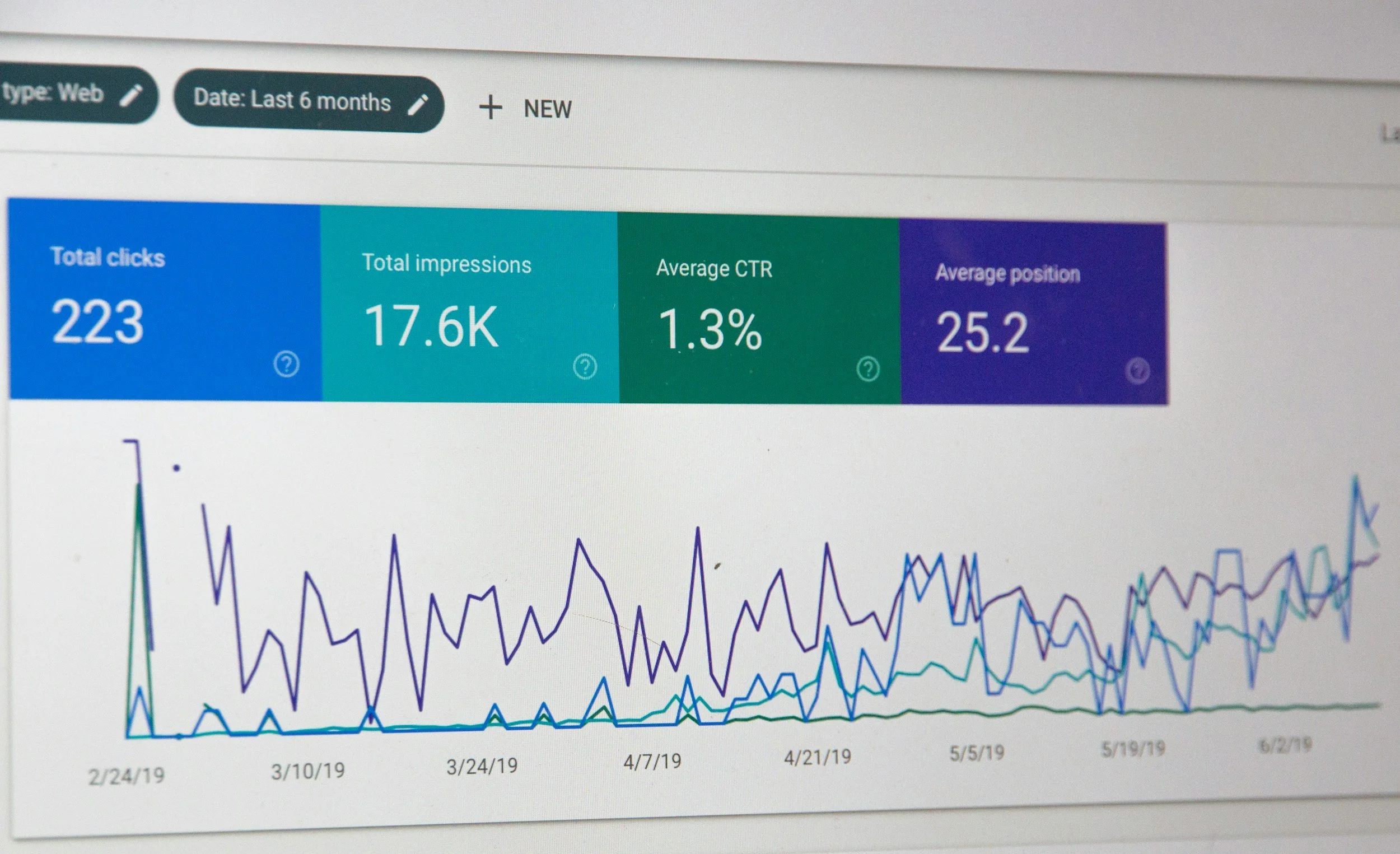
Search Engine Optimization (SEO) for Ecommerce Brands
SEO for ecommerce brands helps online stores appear when customers are actively searching for products online. Effective ecommerce SEO combines product category keyword targeting, technical optimization, collection page structure, content development, authority building, and Google Shopping feed optimization to improve visibility across both traditional search and product-based discovery.
Strong ecommerce SEO focuses on attracting qualified purchase-intent traffic, not simply increasing visitor volume. Because ecommerce search behaviour often begins with product comparison and category research, well-structured SEO helps brands rank for high-intent searches while improving visibility in Google Shopping results through optimized product feeds, titles, attributes, and structured product data.

Software & Systems Development for Ecommerce Brands
Ecommerce businesses often rely on disconnected systems for customer communication, order management, inventory, reporting, and marketing automation. Software development for ecommerce brands helps online businesses improve operational efficiency through custom-built integrations, dashboards, automation workflows, CRM systems, and reporting tools designed around scalable growth.
Whether it involves ecommerce platform integrations, customer data synchronization, automated workflows, custom dashboards, or internal operational systems, stronger infrastructure creates a better foundation for profitable scaling. For fast-growing ecommerce businesses, better systems improve both operational performance and marketing efficiency over time.
Paid Advertising for Ecommerce Brands
Paid advertising for ecommerce brands helps online businesses generate immediate visibility and scalable customer acquisition across multiple channels. Effective ecommerce advertising combines Google Ads, Google Shopping campaigns, Performance Max, Search campaigns, and Meta advertising to capture both existing purchase intent and new customer demand.
Google Ads campaigns for ecommerce require strategic product segmentation, shopping feed optimization, search intent targeting, audience layering, and continuous optimization to maintain profitability. Meta Ads help ecommerce brands expand beyond existing search demand through prospecting campaigns, dynamic product ads, retargeting, and creative testing aligned to buyer psychology.
Successful ecommerce advertising campaigns must be structured around profitability, customer acquisition cost, and lifetime customer value — not just traffic or click volume.

Content Marketing for Ecommerce Brands
Content marketing for ecommerce brands helps online stores improve search visibility, educate customers, and build authority throughout the buying journey. Effective ecommerce content marketing includes category-focused landing pages, buying guides, educational blogs, comparison content, FAQs, product education resources, and SEO-driven content designed to attract high-intent shoppers.
Because many ecommerce purchases involve product research, comparison, and trust-building before purchase, strong content marketing helps ecommerce brands answer objections, demonstrate expertise, and improve conversion rates over time rather than relying entirely on paid advertising spend.

Email Marketing & Customer Retention for Ecommerce Brands
Not every customer purchases immediately — and profitable ecommerce growth depends on more than acquisition alone. Email marketing for ecommerce brands helps recover abandoned carts, re-engage previous customers, nurture first-time buyers, and increase repeat purchase behaviour over time.
Automated retention systems including abandoned cart flows, post-purchase nurturing, win-back campaigns, educational sequences, and product recommendation emails help ecommerce brands maximize customer lifetime value while reducing dependency on increasing advertising spend. For brands like TubTabs, retention systems worked alongside paid acquisition to maximize the return on every acquired customer rather than relying solely on new customer acquisition.

AI Search Optimization for Ecommerce Brands (AEO)
Online shopping behaviour is evolving. Consumers increasingly use AI-powered tools to compare products, research brands, and receive personalized recommendations before purchasing. AI search optimization for ecommerce brands helps online stores improve visibility in AI-generated answers by strengthening product content, structured data, category architecture, and brand authority signals.
Forward-thinking ecommerce growth increasingly requires visibility beyond traditional Google rankings alone. Brands that optimize early for AI search environments position themselves to capture future demand as shopping behaviour continues to evolve.
Core Growth Factors
What Actually Determines Whether Google Ads Generate Profitable Ecommerce Growth
Most ecommerce businesses that have tried Google Ads and been disappointed were not failed by the platform. They were failed by how the campaigns were built and managed. These are the factors that actually determine whether a Google Ads agency generates profitable ecommerce growth — or just spends your budget.
Campaign Architecture Built for Ecommerce Revenue
Shopping campaigns, Performance Max, Search, and remarketing must be structured as an integrated system — not launched independently with no coordination. Siloed campaigns compete against each other, inflate costs, and create attribution confusion that makes optimization impossible. Integrated ecommerce Google Ads architecture ensures every campaign type is doing its most efficient job without undermining the others.
Product Feed Engineering, Not Just Feed Management
A product feed that is merely uploaded is not the same as a product feed that is optimized. Title structure, attribute completeness, product type taxonomy, and image quality determine Shopping and Performance Max eligibility, impression share, and click-through rate — before bidding strategy enters the equation at all. Most ecommerce brands are losing Shopping revenue to competitors with identical products and worse prices — simply because their feeds are structured better.
Bidding Strategy Aligned to Actual Margin, Not Blended ROAS
Bidding to a uniform ROAS target across an entire product catalog treats a $15 product and a $200 product identically. Margin-aware bidding strategies — segmenting campaigns or ad groups by product profitability — generate significantly better returns than flat ROAS targets applied at the account level. This is one of the most consistent improvements Tactycs makes when taking over underperforming ecommerce Google Ads accounts.
Conversion Rate Performance Before Budget Scaling
The most common mistake ecommerce brands make with a Google Ads agency is scaling budget before validating conversion rates. Increasing spend on a 1.2% converting landing page produces proportionally worse results — not better ones. Improving conversion rate from 1.2% to 2.4% effectively doubles revenue without increasing ad spend. Ecommerce Google Ads management that ignores conversion rate is managing only half the system.
Audience Layering and Remarketing Depth
Google Ads for ecommerce without audience segmentation is wasted leverage. Purchase-intent audiences, cart abandoners, past customers, competitor visitors, and high-LTV lookalike segments all respond differently to different creative and bidding strategies. Audience-aware campaign management consistently outperforms single-audience approaches — and remarketing campaigns targeting high-intent behaviour are typically the most efficient spend in any ecommerce Google Ads account.
Velocity of Testing and Optimization
Ecommerce advertising environments change quickly. Consumer intent shifts seasonally, competitor behavior changes, Google's algorithm updates affect auction dynamics, and creative fatigue sets in faster than most agencies acknowledge. The Google Ads agency that generates compounding ecommerce growth is the one with the most disciplined testing cadence — not the one with the most impressive pitch deck. Regular creative testing, bid adjustments, search term analysis, and campaign refinement are what separate ecommerce accounts that improve month over month from accounts that plateau.

Ready to Build a Profitable Google Ads System for Your Ecommerce Business?
Improve your return on ad spend, lower cost-per-acquisition, and scale your ecommerce revenue with Google Ads management built specifically for online stores in Canada.
Execution Framework
How to Improve Google Ads Performance for Your Ecommerce Business
Most ecommerce businesses already know their Google Ads are underperforming. The harder question — the one most agencies avoid answering — is why. Understanding that difficulty is the first step toward understanding why the right Google Ads agency for ecommerce is one of the highest-leverage decisions a Canadian online store can make.
Audit and Rebuild Your Campaign Architecture (Not Just Your Bids)
The instinct when Google Ads performance is poor is to adjust bids, change match types, or switch campaign types. Rarely is that the actual fix. Most underperforming ecommerce Google Ads accounts have structural problems: campaigns competing against each other for the same queries, Shopping and Performance Max running without coordination, branded traffic being consumed by non-branded campaigns, and budget flowing to low-margin products at the same rate as high-margin ones.
Rebuilding ecommerce campaign architecture correctly means segmenting by intent stage, isolating branded from non-branded, structuring Performance Max asset groups by product category, and building bidding strategies around actual product economics. This is not a weekend project — it requires a deep understanding of how Google's auction system interacts with campaign structure, a level of technical knowledge that most in-house marketing teams and many generalist agencies do not have. Getting this wrong means improving everything else about your campaigns while the structural ceiling stays exactly where it was.Optimize Your Product Feed Before You Touch Your Bids
For ecommerce brands running Google Shopping ads or Performance Max, product feed quality is the single most influential variable in campaign performance — and it is almost always the last thing businesses improve. The logic most brands follow is: adjust bids first, then look at the feed if nothing improves. The correct order is the opposite.
Product title optimization for high-intent search query match, attribute completeness for eligibility and relevance, product type hierarchy for structured segmentation, and image quality for click-through rate — all of these influence Shopping and Performance Max performance at a more foundational level than bid adjustments do. A well-optimized product feed in a mediocre campaign structure will frequently outperform a technically sophisticated campaign structure drawing from a weak feed. Most ecommerce businesses have product feeds that were set up once and never touched again. That is exactly the competitive gap that a properly managed Google Ads agency for ecommerce exploits on their behalf — or that their competitors are exploiting against them.
Build a Performance Max Strategy, Not Just a Performance Max Campaign
Google has pushed ecommerce advertisers toward Performance Max as the default campaign type, and most ecommerce businesses are now running it. The problem is that running Performance Max and running Performance Max well are completely different things — a distinction that is not obvious until you compare the ROAS of a well-structured account against a poorly structured one running the same daily budget.
A Performance Max campaign built with a single generic asset group, no audience signals, no brand exclusions, and no creative testing will spend its entire budget primarily on the easiest, lowest-funnel traffic — often cannibalizing branded search traffic and remarketing impressions that would have converted for far less. A properly built Performance Max campaign has structured asset groups by product category and audience segment, custom audience signals layered from first-party data, brand exclusions that protect existing traffic, and creative assets tested and refreshed regularly to avoid performance decay.
The gap in ROAS between these two versions of "the same campaign type" is frequently larger than the gap between having Google Ads and not having them. This is the exact kind of problem that is invisible to anyone without deep ecommerce Google Ads expertise — and exactly why the best Google Ads agency for ecommerce businesses is one of the most valuable marketing investments a Canadian online store can make.Fix Conversion Tracking Before You Optimize Anything Else
This sounds obvious, and most ecommerce businesses believe their conversion tracking is working correctly. In the vast majority of Google Ads accounts Tactycs audits, it is not. Misconfigured Google Ads conversion actions, duplicate conversion counting, missing Google Analytics 4 ecommerce event tracking, improper attribution window settings, and checkout page tracking gaps are all extremely common — and all of them feed inaccurate revenue data into Google's Smart Bidding algorithms, causing the system to optimize toward the wrong signals.
Running Target ROAS or Maximize Conversion Value bidding with inaccurate conversion data is the equivalent of asking someone to optimize your route while feeding them a map with roads missing. The Smart Bidding system is only as good as the data it receives. Ecommerce businesses that have improved their tracking accuracy alone — without changing anything else — have seen significant ROAS improvements within weeks, because the bidding algorithm finally had the data it needed to find the right customers. This is not exciting, it is not visible to your customers, and most agencies skip past it to get to the work that looks more impressive in a status update. It is also, consistently, one of the most impactful changes a Google Ads agency for ecommerce can make.Treat Remarketing as a Revenue System, Not an Afterthought
Consider the ecommerce math: if your store converts at 2%, then 98 out of every 100 visitors leave without purchasing. Google Ads spend brought them to your store. Without remarketing, that spend generated one conversion and 98 departures. With a properly structured remarketing system, a meaningful percentage of those 98 departures are returned to the purchase path — dramatically improving the effective ROI of every dollar spent on acquisition.
Most ecommerce businesses run some form of remarketing. Most run it poorly. Generic "you visited our website" ads shown to every non-converter for 30 days with no bid adjustment, no message variation, and no audience segmentation is not remarketing — it is budget leakage with a targeting layer on top. Effective ecommerce remarketing segments audiences by behaviour (product page viewer vs. cart abandoner vs. checkout starter), by recency (1-day vs. 7-day vs. 21-day), and by value potential (high-LTV product category vs. low-margin browse). Each of these segments deserves different creative, different bid multipliers, and different frequency caps. Building this correctly is time-consuming and technically detailed. Doing it wrong costs money. Doing it right is one of the most efficient revenue levers in the entire ecommerce Google Ads ecosystem — and yet it remains chronically underbuilt in most accounts Tactycs inherits.Scale Budget Systematically, Not Reactively
Every ecommerce business that is running profitable Google Ads eventually wants to scale. And almost every time budget is scaled without a deliberate framework, performance degrades. Cost-per-acquisition increases, ROAS drops, and the response from the managing agency is usually some version of "that's normal at higher spend levels." Sometimes it is. More often, it is a symptom of scaling a system that was not built for scale.
Ecommerce Google Ads scaling requires a specific sequence: validate conversion rates before adding budget, confirm product feed quality before expanding Shopping reach, ensure Performance Max asset quality before increasing spend signals, and build proper audience depth before widening targeting. Scaling budget into an unoptimized account simply amplifies existing inefficiencies at a higher cost. The ecommerce brands that scale profitably — that achieve TubTabs-level results of 7.14× ROAS while growing customer acquisition month over month — do so because they built the system correctly before they scaled it, not in spite of the constraints of doing so.
This is also why hiring the best Google Ads agency for your ecommerce business is one of the highest-leverage decisions a Canadian online store can make. The cost of a competent Google Ads agency for ecommerce is a rounding error compared to the cost of running the wrong campaigns at scale for six months.

Get More Sales, More Customers, More Revenue
Improve your Google rankings, local visibility, and lead generation with a strategy built specifically for e-commerce businesses.
Why Ecommerce Businesses in Canada Choose Tactycs as Their Google Ads Agency
There are many Google Ads agencies in Canada. Most will tell you they specialize in ecommerce. Few can demonstrate the kind of structured, scalable ecommerce revenue growth that separates genuinely effective Google Ads management from campaign maintenance with a monthly reporting cadence.

We build ecommerce Google Ads systems, not just campaigns. Every campaign type, Shopping, Performance Max, Search, remarketing — is engineered to work together as a connected revenue system that improves in efficiency month over month, not a collection of isolated campaigns managed in parallel.
We understand how ecommerce buyers search, evaluate, and purchase. The path from a Google search to an ecommerce conversion involves product feed quality, Shopping ad positioning, landing page experience, trust signal placement, and checkout friction — all of which we optimize as part of a complete Google Ads management engagement, not just the ad account in isolation.
We optimize for profitable revenue, not impressive metrics. Our TubTabs campaign generated 7.14× return on ad spend with customer acquisition costs held under $25, and customer growth of 2000% in the first month compared to the previous agency. Those numbers exist because the system was built for profitability from the start — not retrofitted with efficiency goals after the budget was spent.
We focus on building long-term compounding performance, not short-term results that plateau. The ecommerce brands that grow consistently are the ones with Google Ads systems that improve as data accumulates — better audience signals, better feed quality, better creative performance, better attribution accuracy. We build for that compounding performance curve, not for a strong first-month report followed by eighteen months of explaining why results are not improving.
Real Results From E-commerce We’ve Helped Grow ➤

Ecommerce Sectors We Serve
Google Ads Management for Ecommerce Businesses Across All Product Categories
Tactycs works with ecommerce businesses across a wide range of product categories and store types, building Google Ads strategies tailored to each vertical's specific buyer behaviour, competitive intensity, and margin economics.
Health, Beauty & Wellness
Google Ads and Shopping campaign management for health, personal care, beauty, and wellness ecommerce brands competing in high-conversion, brand-sensitive categories.
Home & Garden Products
Shopping and Performance Max management for home goods, garden supplies, outdoor living, and home improvement ecommerce brands targeting high-intent homeowner audiences.
Sports, Fitness & Outdoor
Ecommerce Google Ads for sports equipment, fitness products, and outdoor recreation brands — including seasonal campaign management and high-value SKU segmentation.
Pet Products
Google Ads management for pet food, supplies, and care products — a high-repeat-purchase ecommerce category where remarketing and lifetime value optimization are critical.
Food & Beverage Ecommerce
Google Ads for Canadian food and beverage ecommerce brands navigating subscription models, repeat purchase economics, and the trust signals required for consumable product conversion.
Automotive & Marine Products
Ecommerce Google Ads for automotive accessories, marine supplies, and vehicle care products — including highly specific application-based keyword targeting for technical product categories.
Apparel & Fashion
Shopping campaign management and Performance Max for apparel and fashion ecommerce, including seasonal strategy, size and variant feed optimization, and high-LTV audience development.
Technology & Electronics
Google Ads for electronics and technology ecommerce brands competing in high-competition, price-sensitive categories where product feed quality and bidding precision directly determine profitability.
Specialty & Niche Products
Google Ads management for ecommerce brands in niche categories — the exact type of opportunity where low-competition keyword targeting and a strong content strategy can generate exceptional ROAS with relatively modest ad spend.